Eiffel Tower
The Eiffel Tower rises 330 meters above Paris like a quiet giant that everyone recognizes. Built in just over two years for the 1889 World’s Fair, it marked the 100th anniversary of the French Revolution and quickly became the most visited paid monument on the planet. Today it draws more than 6.75 million people each year who climb its levels, while another 10 million walk the free forecourt below. That makes it one of the few places where history, engineering, and city views come together in a single spot.
I still remember the first time I stood at its base on a cool spring evening. The iron lattice looked lighter than I expected, almost delicate against the sky, yet it has stood firm through wind, weather, and more than a century of change. From the ground it feels massive; from the top it feels like the whole city belongs to you. The tower sparkles for five minutes every hour after dark, a simple light show that still stops conversations on the riverbanks.
Whether you take the stairs for the workout or ride the lift straight to the summit, the experience mixes wonder with practicality. You see the Seine curving through the city, the rooftops of the Latin Quarter, and on clear days the distant hills. The structure itself weighs 7,300 tons of iron held together by 2.5 million rivets, yet it sways only a few centimeters in high winds. That balance of strength and grace is what keeps people coming back.
Paris without the Eiffel Tower is hard to picture. It is not just a landmark. It is the place where first-time visitors feel they have truly arrived and where locals still pause to look up on their way home. This guide walks you through everything you need to know so your visit feels smooth and memorable.
Snapshot
-
Ratings: 4.6/5 (TripAdvisor, based on 143,000+ reviews)
-
Location: Paris, France (Champ de Mars, 7th arrondissement)
-
Annual visitors: 6.75 million (paid access to levels in 2025)
-
Peak season: Late June to early September
-
Opening hours: 9:30 a.m. to 11:00 p.m. or midnight (varies by date; last ascent 45 minutes before close)
-
Duration: 2 to 3 hours
-
Basic entry price: €14.80 (adult, stairs to 2nd floor)
Why Visit the Attraction
The Eiffel Tower offers something few other monuments can: a 360-degree view of Paris from the center of the city. Its open iron design lets light and air flow through, so you never feel closed in even at the highest point. That unique lattice structure, once called ugly by some artists, now defines the skyline and proves engineering can be beautiful.
Here are the top three things to see or do:
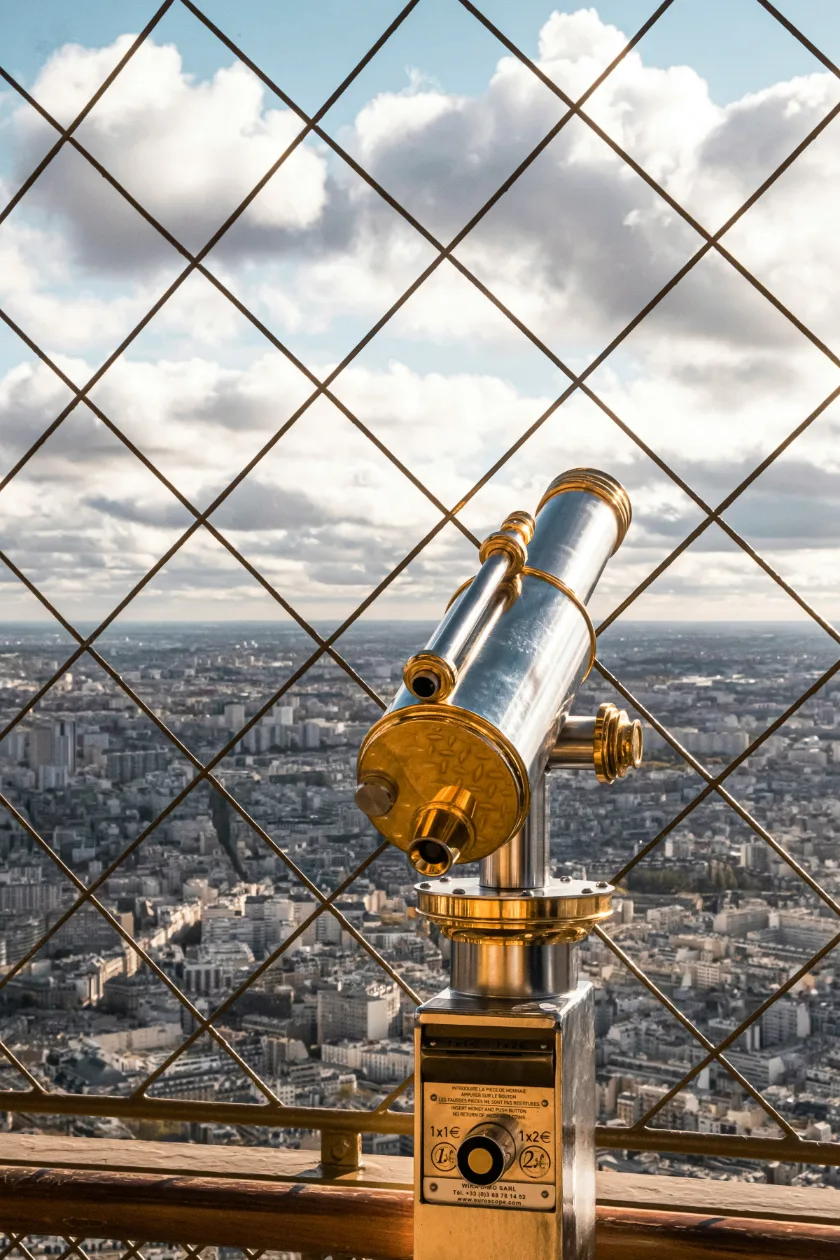
1. View from top.
Stand 276 meters up on the top platform and look straight down at the city grid. On clear days you spot landmarks 50 kilometers away.
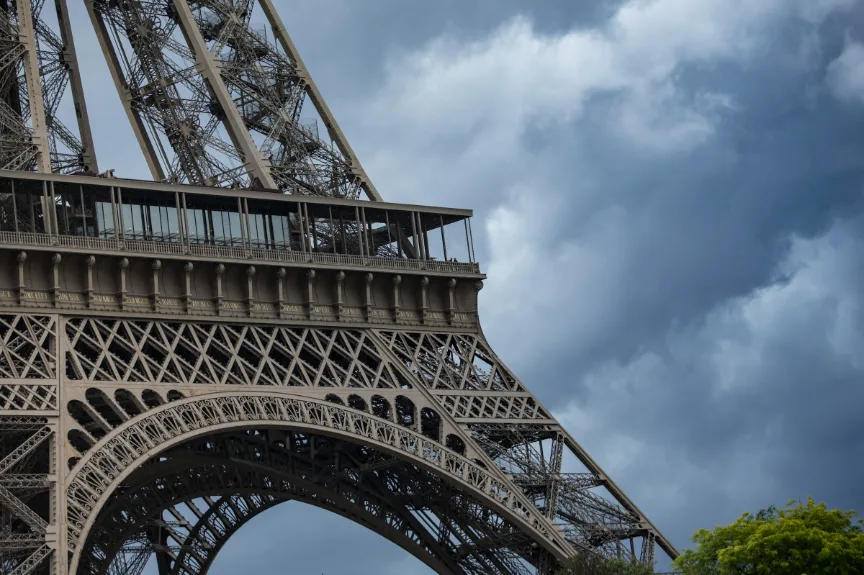
2. The second floor.
At 115 meters you are close enough to feel part of the structure yet high enough for wide views. The glass floor section gives a direct look at the ground below.
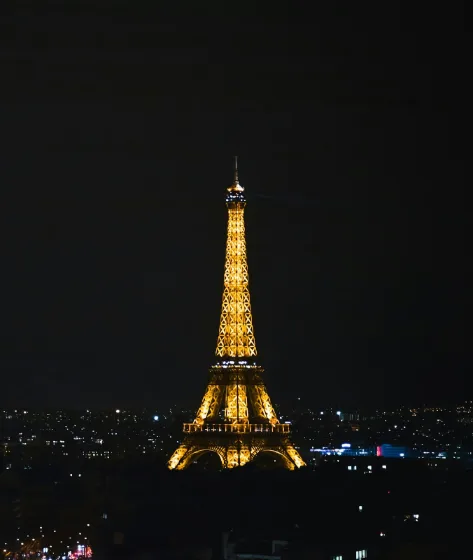
3. Watch the tower sparkle at night.
Every hour on the hour the lights flash for five minutes. Seeing it from the Champ de Mars or a Seine boat ride makes the moment last longer.
Must-see highlights include the first-floor restaurant Madame Brasserie for a meal with a view, the small museum on Gustave Eiffel’s life, and the glass safety panels that replaced old railings. Each level has its own pace: the base feels busy with people picnicking, the middle levels feel thoughtful, and the top feels private even when others are there.
Plan Your Visit
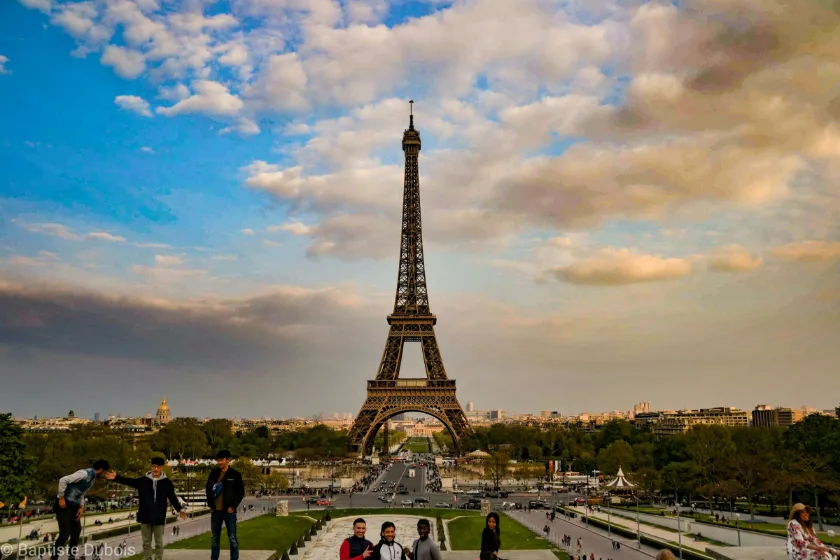
Opening Hours
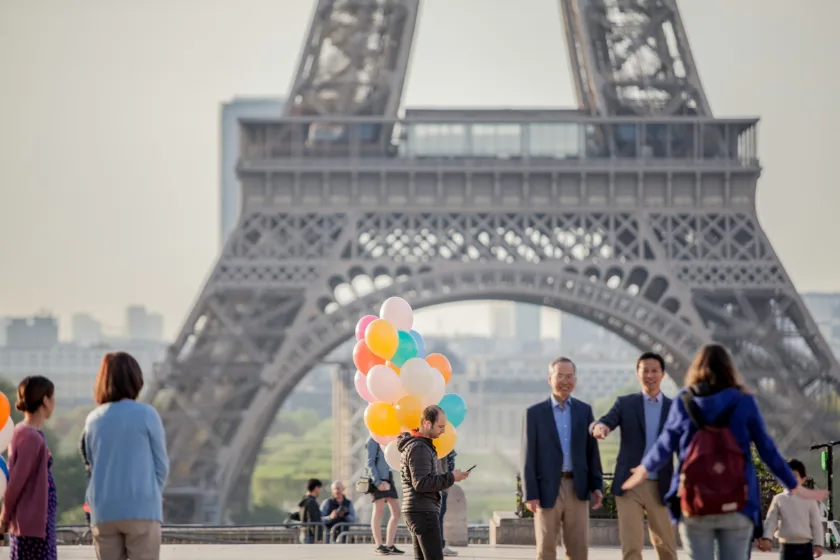
The Eiffel Tower opens every day of the year. Hours usually run from 9:30 a.m. to 11:00 p.m., sometimes until midnight in summer. Last ascent is 45 minutes before closing. Check the official site for your exact date because weather or maintenance can shift times slightly.
Duration
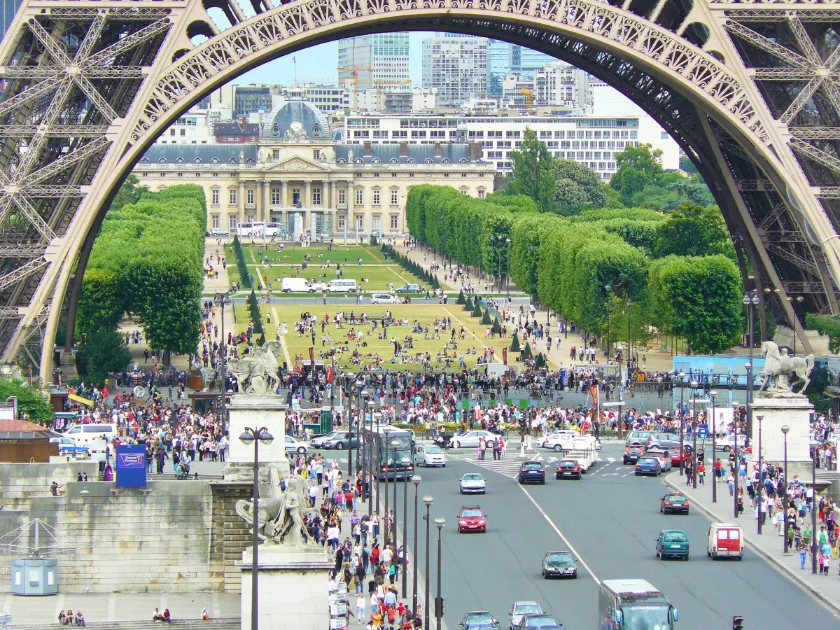
Plan two to three hours total. That covers time in line, the climb or lift rides, and time on each level. If you stay for a meal or sunset, add another hour.
Best Time to Visit
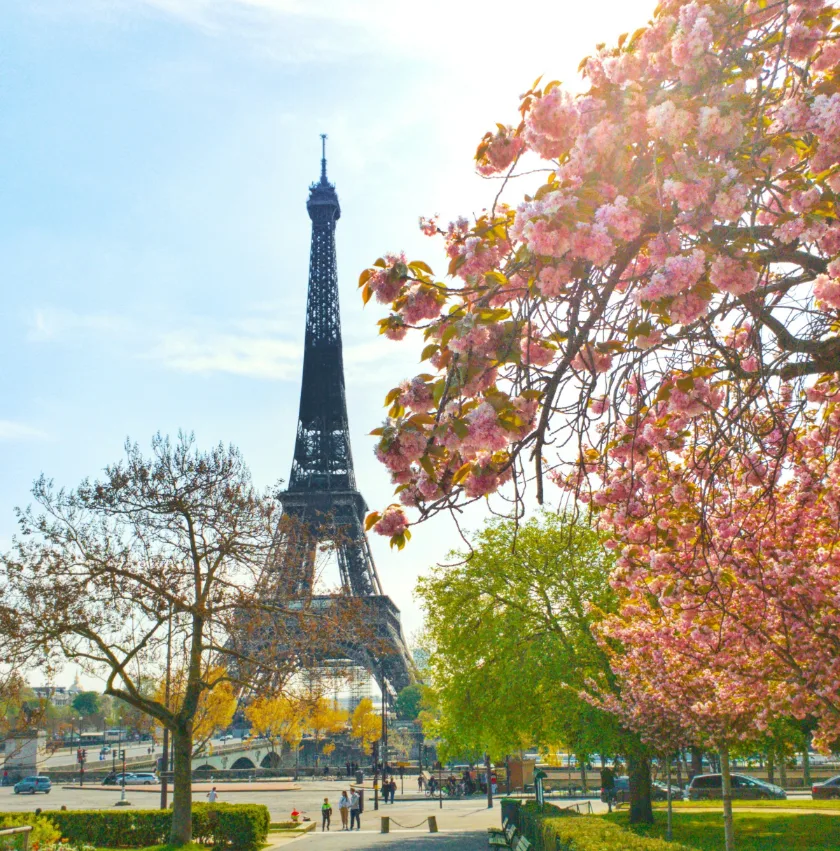
Spring (April to June) and fall (September to October) bring milder crowds and comfortable temperatures. Early morning or after 8 p.m. lets you skip the longest waits. Summer evenings work well if you want the sparkle show, but expect more people. Winter offers shorter lines and a different light on the city.
Tickets & Prices
Buy tickets online in advance from the official website. Prices start at €14.80 for adults using stairs to the second floor. The summit via lift costs €36.70 for adults. Youth, children, and disabled visitors pay less. Children under four enter free but still need a ticket. Prices can change, so confirm before you book.
How to Reach, Entrances & Accessibility
Take Metro line 6 to Bir-Hakeim or line 9 to Trocadéro. RER C stops at Champ de Mars–Tour Eiffel. Buses
30, 42, 63, and 82 also serve the area. The main entrance is at the base on Avenue Gustave Eiffel.
Security checks happen before you reach the ticket area.
Lifts serve the first and second floors for visitors with reduced mobility. The top floor and stairways
are not suitable. Staff can help with transfers on guided tours. Guide dogs are welcome. Wheelchair users
should buy lift tickets and note that the top platform has limited space.
Tours & Experiences
Guided tours add context without rushing you. Official skip-the-line options let you walk past the queues and learn about the engineering while you climb. For a special evening, book a table at Madame Brasserie on the first floor. The meal includes the tower views and a glass of wine while the city lights up outside. Some operators combine the tower with a Seine cruise or a picnic in the Champ de Mars. Choose the experience that matches your pace. All official tours use the same ticket prices as the website, so you never overpay.
Book Your Tickets Now!
History
Gustave Eiffel did not set out to build a tower that would last forever. In 1884 his engineers Maurice Koechlin and Émile Nouguier sketched a tall iron pylon for the 1889 World’s Fair. They wanted to prove iron could reach 300 meters and celebrate the French Revolution’s centennial. Architect Stephen Sauvestre added the base arches that still frame the entrance.
Construction started January 26, 1887. Workers first dug foundations using compressed-air caissons so the tower would sit firm beside the Seine. Prefabricated parts arrived from Eiffel’s factory in Levallois-Perret. On site, 150 to 300 men riveted 18,038 pieces together with 2.5 million rivets. They finished the job in two years, two months, and five days, ahead of schedule and under budget.
The tower opened to the public May 15, 1889. Two million people climbed it during the fair. Not everyone liked it at first. A group of artists and writers signed a protest calling it a “useless monstrosity.” Guy de Maupassant supposedly ate lunch there every day because it was the only place in Paris where he could not see the tower. Eiffel answered the critics by explaining how the curved legs spread wind forces perfectly. The math proved stronger than the complaints.
After the fair many wanted the tower torn down. Eiffel kept it alive by installing a radio antenna in 1909. It became a vital telegraph station during World War I and has broadcast television and radio ever since. Today it stands 330 meters tall with antennas and weighs the same 7,300 tons it did in 1889. Paint crews refresh its 60 tons of coating every seven years using the original “Eiffel Tower brown” shade.
The structure has hosted daring feats too: a 1923 bicycle ride down the stairs, trapeze artists in 1952, and even a roller-skater in 2010. Through all of it the tower has remained open every day, a steady presence in a city that changes around it.
Visitor Reviews
Most people leave with the same thought: the views make the visit worthwhile. One recent reviewer wrote, “We went at dusk and watched the city lights come on. The sparkle show felt magical from the second floor.” Families often mention how easy the lifts are for kids. Another visitor noted, “Stairs to the second floor gave us a real sense of the height and the work that went into building it.” The main complaint is crowds in July and August, but almost everyone says buying tickets ahead solved that. Overall the consensus is clear: plan your timing and the Eiffel Tower delivers exactly what you hope for.
Nearby Attractions
You can fill a full day without leaving the neighborhood.
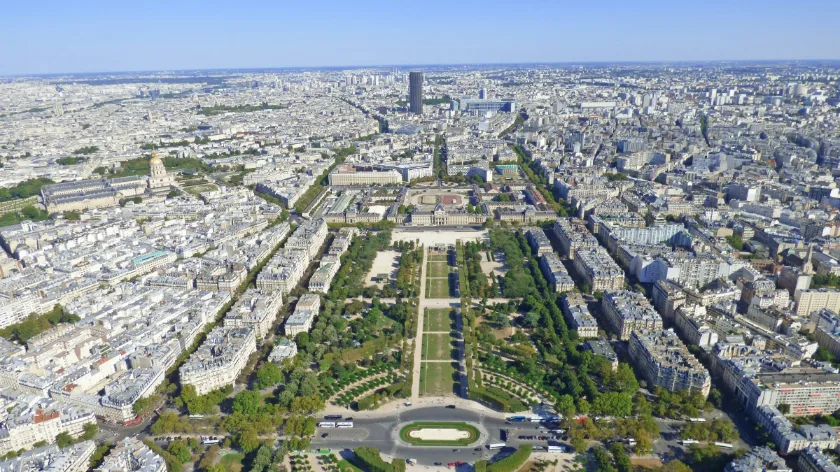
1. Champ de Mars
The long grassy park behind the tower is perfect for a picnic with views of the structure.
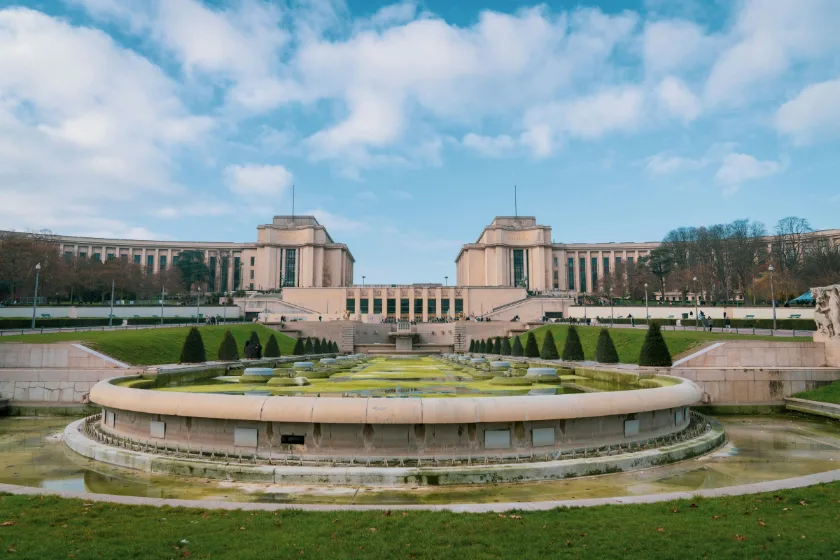
2. Trocadéro Gardens
Cross the river for the classic postcard photo from the terrace and fountains.
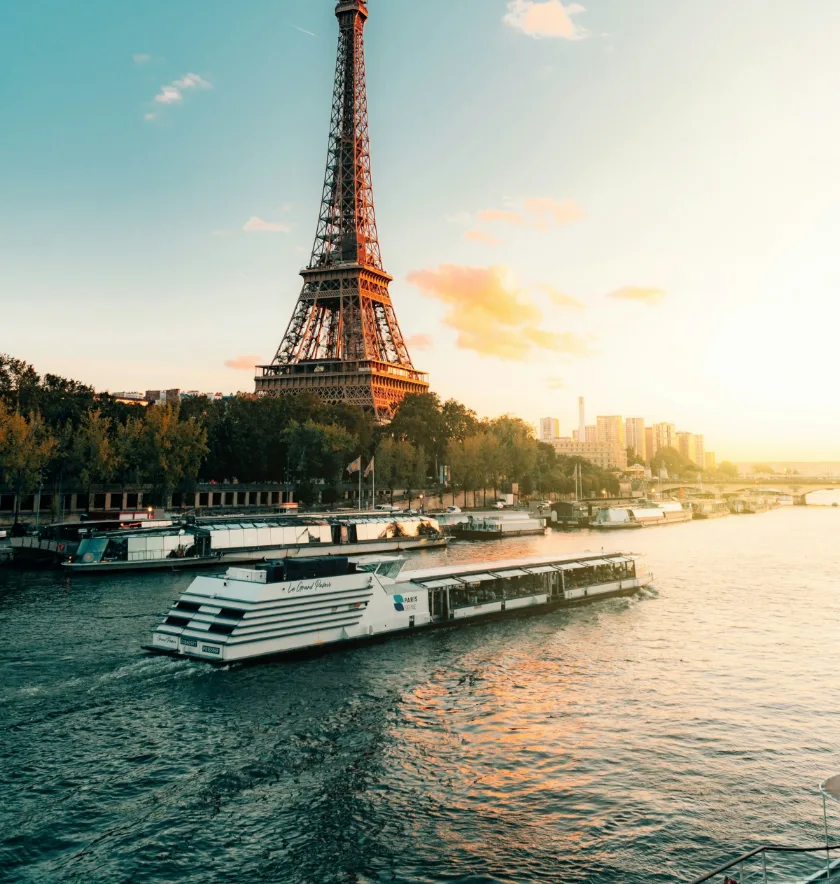
3. Seine River Cruise
Boats leave from right under the tower. A one-hour ride shows the city from a new angle.
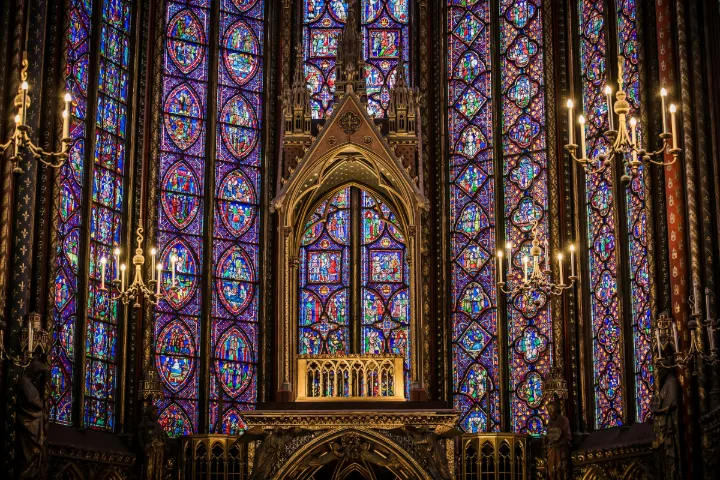
4. Sainte-Chapelle
Nearby on the same island, its stained-glass windows create a colorful, light-filled experience.
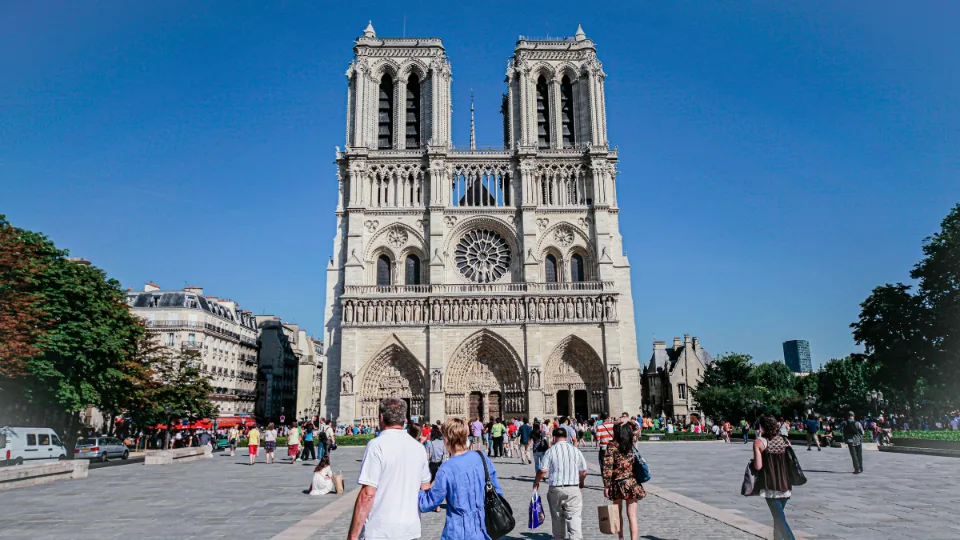
5. Notre-Dame Cathedral
A pleasant stroll along the river leads to this Gothic landmark on Île de la Cité.
Frequently Asked Questions
Do I need to buy tickets in advance?
Yes. Online tickets guarantee entry at your chosen time and save hours in line.
Can I bring a backpack?
Small bags are allowed after security screening. Large luggage or coolers are not.
Is the tower open on Christmas or New Year’s?
Yes, it stays open every day. Hours may end earlier on holidays, so check the calendar.
Are there restrooms inside?
Restrooms are available on the first and second floors. Lines move quickly.
Is photography allowed everywhere?
Yes. Tripods are fine on the ground but not on the upper platforms during busy times.
What happens if it rains?
The tower stays open. Upper levels can feel windy and wet, so wear layers and comfortable shoes.
Can children climb the stairs?
Yes, but younger kids usually prefer the lift. There is no age minimum for stairs.